PIFF module upgrade for GMP cleanrooms
PIFF module upgrade for GMP cleanrooms
Discover how Exyte’s Stefan Kappeler and Exentec´s Steffen Eckstein are shaping the future of biopharma with pioneering innovation in cleanroom HVAC design
Can PIFF recirculation air models effectively replace ceiling diffusers in biopharma cleanrooms?
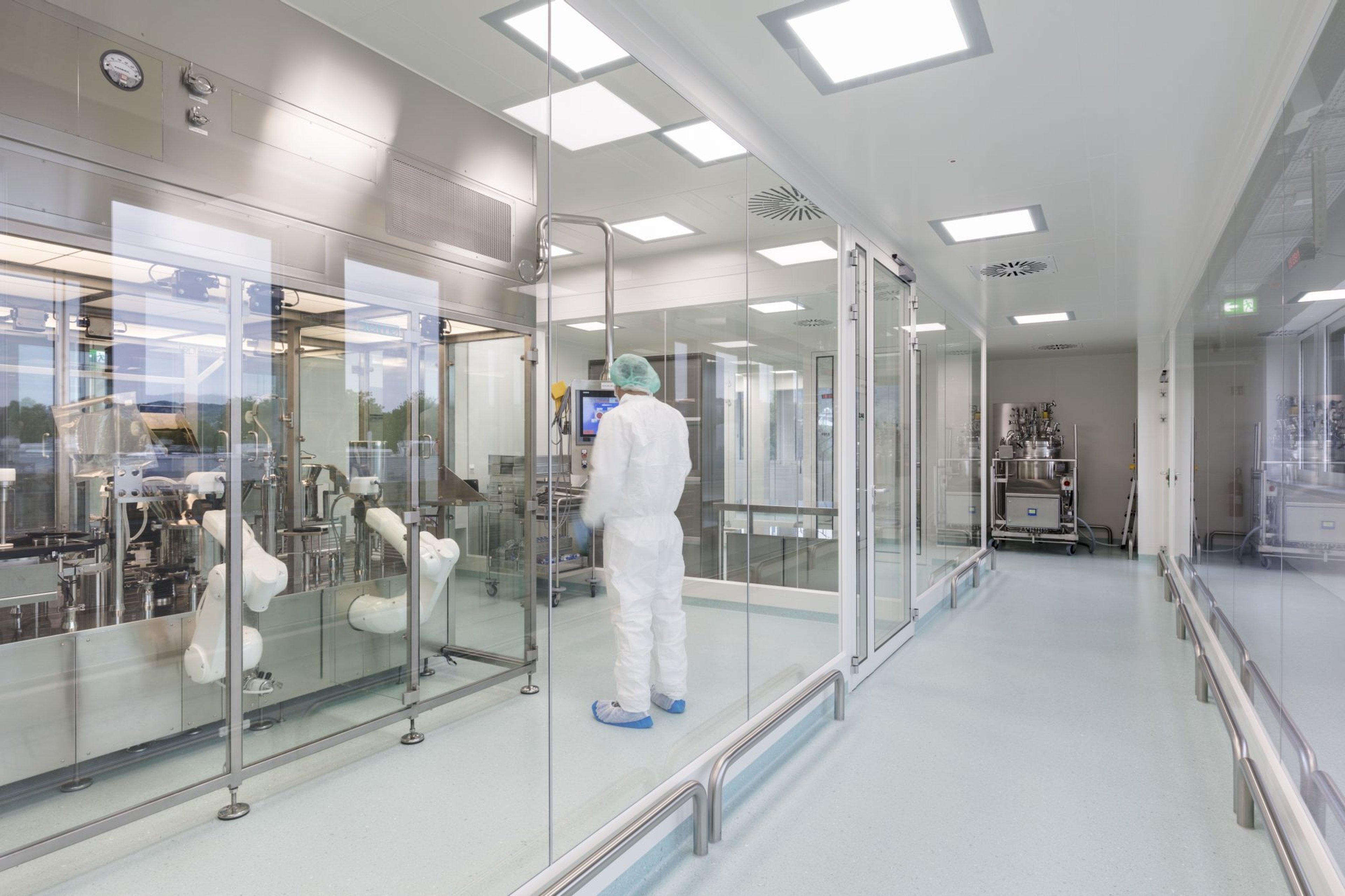
What happens when 18 conventional ceiling diffusers and an exhaust air duct system are replaced by just eight self-contained Plenum Integrated Filter Fan (PIFF) recirculation modules? This question is the central focus of a recent study examining Heating, Ventilation, and Air Conditioning (HVAC) design alternatives in Good Manufacturing Practice (GMP)-compliant biopharmaceutical cleanrooms.
The study was conducted within a 535 m³ production space and sets out to evaluate whether a simplified, decentralized air circulation model – specifically using PIFF modules - can meet the performance benchmarks set by traditional systems.
Meet the experts behind the study
This study was created by two leading industry experts:
- Steffen Eckstein, Business Development Manager Biopharma & Life Science at Exentec, Germany and Dr. Stefan R. Kappeler, Senior Director Biopharma & Life Sciences at Exyte, Switzerland
- Using computational fluid dynamics (CFD) simulations, Eckstein and Kappeler evaluated HVAC performance by comparing temperature stability, airflow uniformity, and particle control between traditional and alternative systems.
Simulation of two HVAC designs under identical conditions
Eckstein and Kappeler conducted CFD simulations for two ventilation strategies:
- Traditional setup: 18 ceiling diffusers combined with centralized ductwork
- Alternative setup: 8 self-contained PIFF recirculation modules installed in the ceiling
Both setups were evaluated for their ability to maintain GMP-compliant air quality standards, including thermal comfort, particle decay time, and airflow uniformity.
Read the full study to learn how Exyte and its partners are pioneering innovation in cleanroom HVAC design.
Key findings
Despite taking up less physical space and requiring no extensive duct network, the PIFF modules achieved the same, if not better, performance than the traditional design in several key areas:
- Airflow: Flow rates were comparable and uniform across both setups.
- Temperature control: Enhanced cooling performance maintained a cooler and stable environment.
- Particle decay: Particle clearance was as efficient as the traditional setup.
The PIFF modules also saw a decrease in energy consumption, which further highlighted the efficiency and sustainability benefits of using this innovative approach.
Rethinking HVAC design in biopharmaceutical environments
The study offers evidence that self-contained PIFF recirculation modules can work as an energy-efficient alternative to traditional HVAC systems in biopharma cleanroom environments. This approach has the potential to reshape HVAC strategy in both new and existing biopharmaceutical facilities, while still maintaining regulatory compliance standards.