Semiconductors
Tool Install on increasingly complex semiconductor projects
Semiconductors
Tool Install on increasingly complex semiconductor projects
As semiconductor fabs continue to scale in complexity, speed, and investment size, project delivery is under increasing pressure to be faster, more integrated, and more predictable. Tight schedules, high levels of coordination, and the need for a seamless transition from construction to production are reshaping how projects are executed.
For Mark Mak, Project Manager at Exyte, this evolution is particularly visible in Tool Install (TI). No longer just a final construction phase, TI is becoming a critical component of overall project delivery, directly impacting costs and the timeline of getting to operational readiness.
In this interview, Mak shares his perspective on how Tool Install is evolving in response to increasing project complexity and compressed delivery timelines. Drawing on industry experience and lessons learned from recent projects, he explains how closer integration, early planning, and strong client collaboration can support more reliable project outcomes.
Mak's project team recently received an Exyte Operational Excellence Award in the Client Partnership category for its work on a Tool Install and Hook-Up project in Asia. Working closely with the client, the team optimized designs and responded to demanding schedule requirements. The project was noted for its flexibility, ownership, and commitment to safe execution.
Tool Install: a critical phase in modern fab projects
What is Tool Install in semiconductor fab projects?
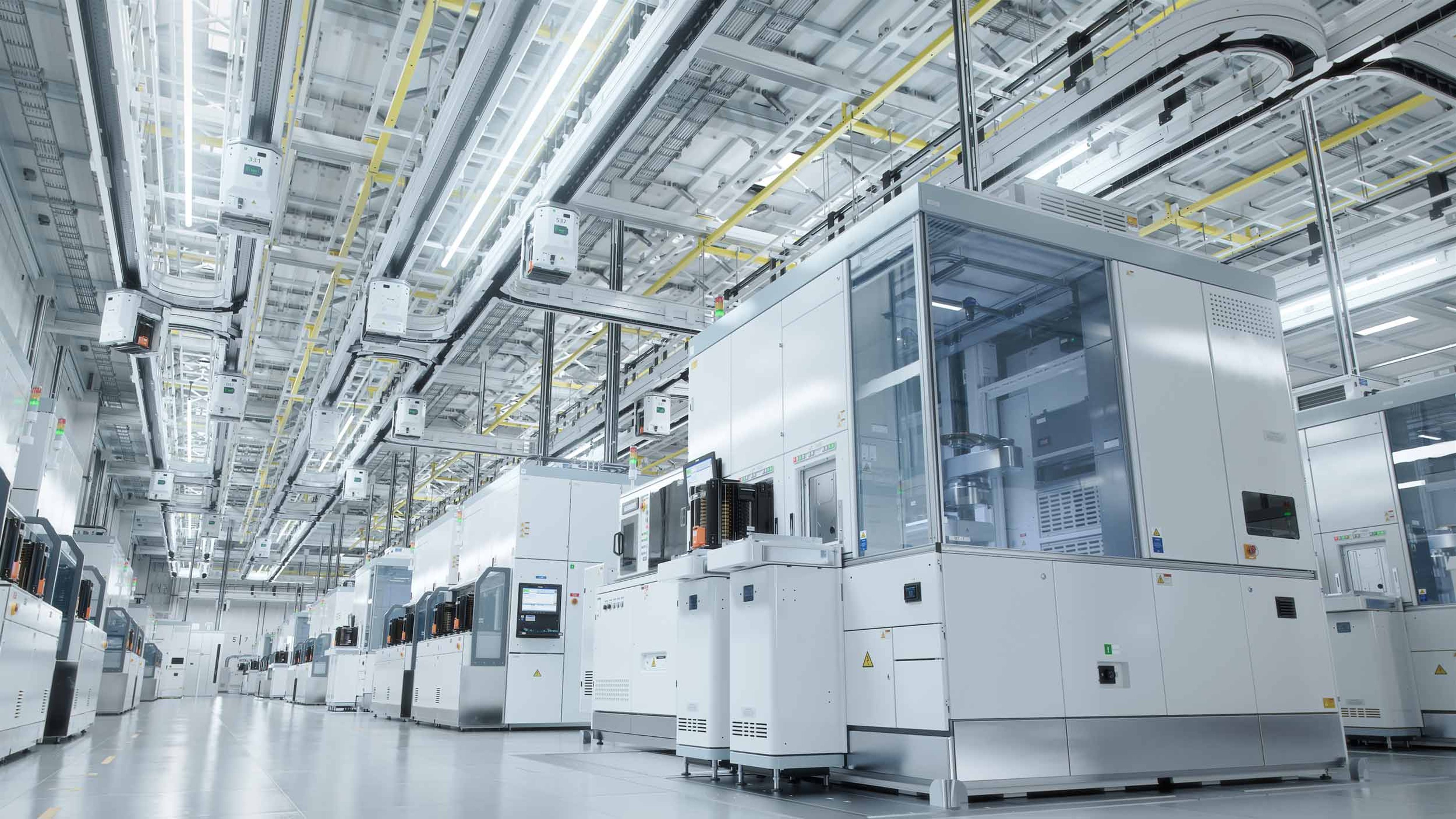
Mark Mak: Tool Install is the process of bringing semiconductor manufacturing equipment into a fab, positioning it, and connecting it to all the systems it needs to operate. The work goes far beyond installation. Each tool must be connected to a range of utilities, including power, cooling water, process gases, chemicals, exhaust systems, and data networks. The equipment also needs to be integrated with the facility's automation and control systems so it can operate reliably within the production environment. Tool Install has evolved into a highly coordinated activity involving engineering, logistics, safety, quality management, and project execution. The goal is to bring equipment into operation with minimal disruption to the overall project schedule.

Mark Mak is a Project Manager at Exyte whose project team recently received an Operational Excellence Award for its work on a Tool Install and Hook-Up project in Asia.
As semiconductor fabs become more complex and project timelines continue to shorten, how do you see the role of Tool Install evolving?
The role of Tool Install is evolving from a sequential, on-site construction activity to an integrated, highly orchestrated logistical and engineering discipline. Given the compressed timelines, it is no longer just about physical placement but about enabling faster time-to-market for the fab's production capacity.
Tool Install is also becoming more closely integrated with the final stages of fab construction. The traditional model of completing the building before starting Tool Install is increasingly being replaced by concurrent execution, requiring just-in-time delivery of tools and modules.
What are the main developments shaping this evolution?
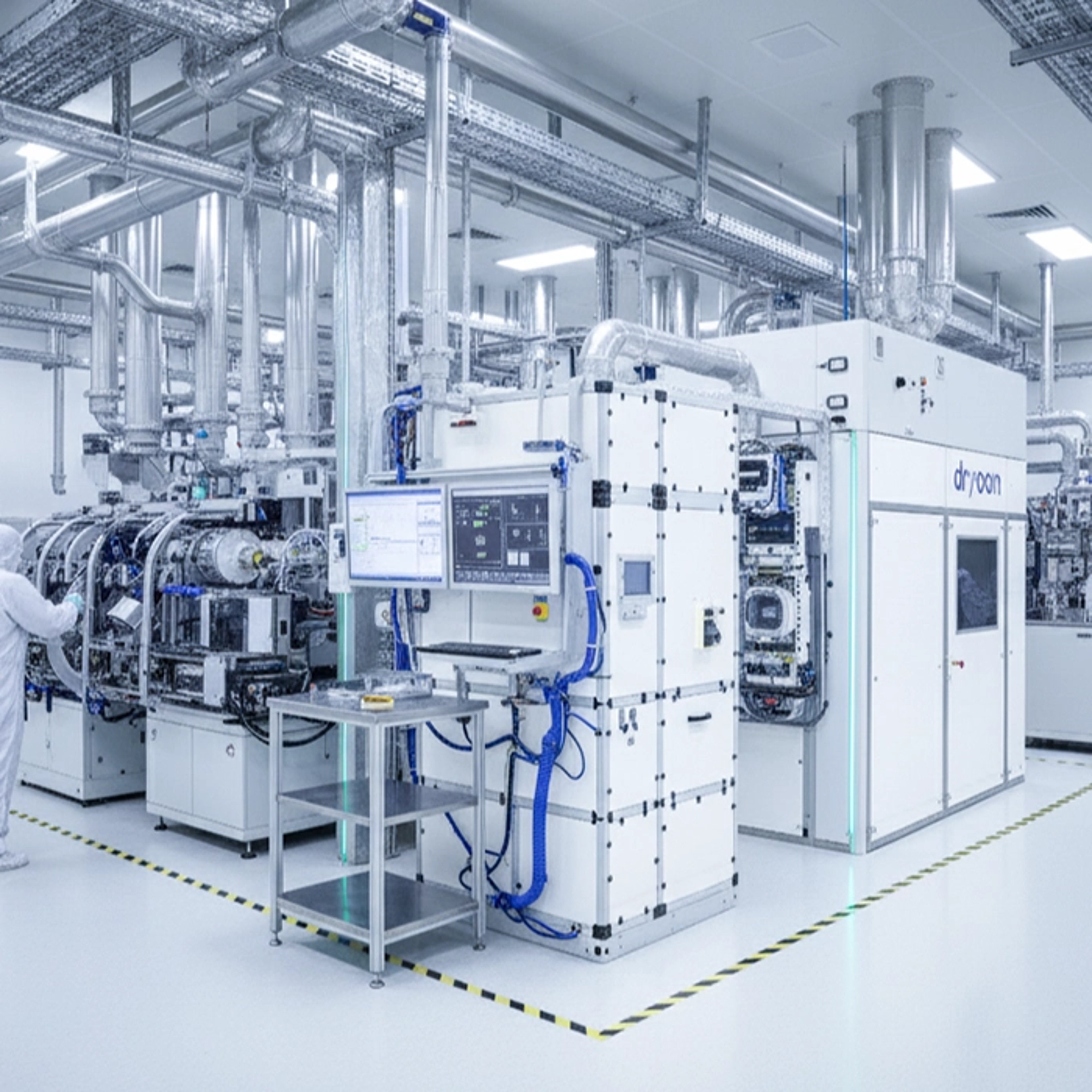
Several key developments are driving this change. One is the growing use of Off-Site Manufacturing (OSM). To manage complexity and space constraints, large prefabricated modules such as cooling skids or utility racks are assembled in dedicated off-site facilities. This makes the on-site Tool Install phase faster, cleaner, and less prone to delays caused by weather or congested workspaces.
Another important trend is the increasing reliance on digital tools. Tool Install increasingly depends on Digital Twins and data analytics to simulate and control every aspect of the installation before physical work begins, reducing risk and improving precision.
With increasing integration requirements and compressed schedules, what are the key challenges clients are facing during the Tool Install phase?
Based on industry research and project data, clients face several critical challenges.
One challenge is extended equipment lead times. Growing demand for advanced semiconductor manufacturing tools, particularly those used in leading-edge chip production, can create significant lead-time pressures across the supply chain. This makes aligning tool delivery with fab readiness increasingly difficult.
Clients also face logistical and site congestion issues. In large-scale projects, particularly brownfield expansions on existing sites, space for storing modules and heavy equipment is extremely limited, while roadways are often narrow and cannot be blocked.
A further challenge is the integration of legacy and new tools. Fabs must connect highly automated new equipment with legacy systems that often lack modern communication standards. Achieving the required level of factory automation can therefore require complex hardware retrofits and custom software solutions.
Integrating Tool Install into project delivery
In such a demanding environment, how does Exyte position its Tool Install capabilities to support clients?
Exyte positions its Tool Install capabilities through an integrated delivery model that combines global expertise with a strong focus on partnership.
We use our global network to provide a seamless process. On a major project in Malaysia, teams in India created 3D designs, while a dedicated workshop in Singapore fabricated more than 1,000 modules before they were delivered to site in Malaysia for final installation.
To support Tool Install, Exyte also uses Off-Site Manufacturing (OSM) where appropriate. By pre-assembling utility systems and other components away from site, installation activities can be completed more efficiently and with less disruption in space-constrained environments.
We also position ourselves not just as a contractor but as a trusted partner, focusing on building strong, trust-based relationships with clients. This involves open sharing of information and close collaboration to resolve quality issues as they arise.
As digitalization becomes increasingly important in project delivery, how does Digital Tool Install (DTI) improve planning, coordination, and execution?
Digital Tool Install fundamentally transforms project delivery by creating a data-centric environment for planning and control. DTI uses 3D modeling and virtual simulations to plan the installation sequence in a digital environment.
Digital twins enable real-time monitoring of progress against the plan. Sensors on equipment and modules can feed status updates into the digital model, allowing project managers to track location, installation progress, and quality checks instantly and respond rapidly to delays.
By simulating the physical process, DTI supports the goal of "First Time Right," reducing costly and time-consuming on-site rework. This is critical for maintaining project schedules.
Project delivery and operational excellence
In complex and fast-paced fab projects, how does strong project management contribute to successful Tool Install delivery?
Project management is fundamental to Tool Install. In highly dynamic environments, teams require clear planning, continuous monitoring, and effective decision-making.
Strong coordination across engineering teams, subcontractors, and clients is also essential to ensure alignment and efficiency.
At Exyte, this is supported by established management processes, experienced teams, and digital tools, enabling better coordination and more informed decision-making throughout the project lifecycle.
In your view, what does “excellence” mean in Tool Install projects, and how is it demonstrated in day-to-day execution?
Excellence means achieving predictable, high-quality outcomes on schedule and on budget through disciplined, collaborative execution rather than heroics.
It starts with a "First Time Right" mentality and a relentless focus on quality in daily activities. One example is the rigorous Factory Acceptance Testing conducted at suppliers' facilities before equipment is shipped. On one project, this proactive approach, combined with daily quality checklists and open issue resolution between client and contractor, led to the client rating the team as an "Excellent Partner".
Excellence is also demonstrated through proactive communication and team integration. It becomes visible when a site manager in Malaysia joins a daily video call with a design team in India and a fabrication team in Singapore to resolve an issue immediately instead of waiting for a weekly report.
Another important aspect is empowerment and ownership. Excellence is demonstrated when every team member feels their input matters. Creating a culture with open communication and collaborative problem-solving is a hallmark of successful project execution.
Looking ahead, how will AI shape the future of Tool Install?
The future of Tool Install will be strongly influenced by deeper integration of AI and increasingly intelligent digital tools.
One trend is AI-driven simulation and autonomous planning. Digital twins will become increasingly intelligent through the application of AI. Instead of simply visualizing a plan, AI will autonomously generate and optimize installation sequences, predict potential delays, and automatically reschedule downstream tasks to maintain workflow.
AI is also expected to play a growing role in logistics and supply-chain management. As equipment lead times remain volatile, AI will increasingly be used to dynamically manage supply chains. For legacy tool integration, more standardized retrofit kits and AI-assisted configuration solutions are expected to reduce the need for extensive custom engineering.
What role will sustainability play in the next generation of Tool Install projects?
Sustainability will become an increasingly important consideration in Tool Install projects. Processes will be increasingly driven by energy-efficiency objectives, including the optimization of utility systems such as power, water, and exhaust infrastructure to minimize energy loss.
At the same time, Tool Install teams will play an important role in supporting the deployment of advanced energy-efficient manufacturing tools from day one, helping clients achieve both operational and sustainability goals.
Off-site Manufacturing
Exyte's Off-site Manufacturing (OSM) approach enables more predictable delivery of complex facilities through modularization, standardization and industrialized execution. Discover how OSM supports accelerated project delivery across semiconductors, biopharma and life sciences, batteries and data centers.