Forging semiconductor supply chain resilience
Forging semiconductor supply chain resilience
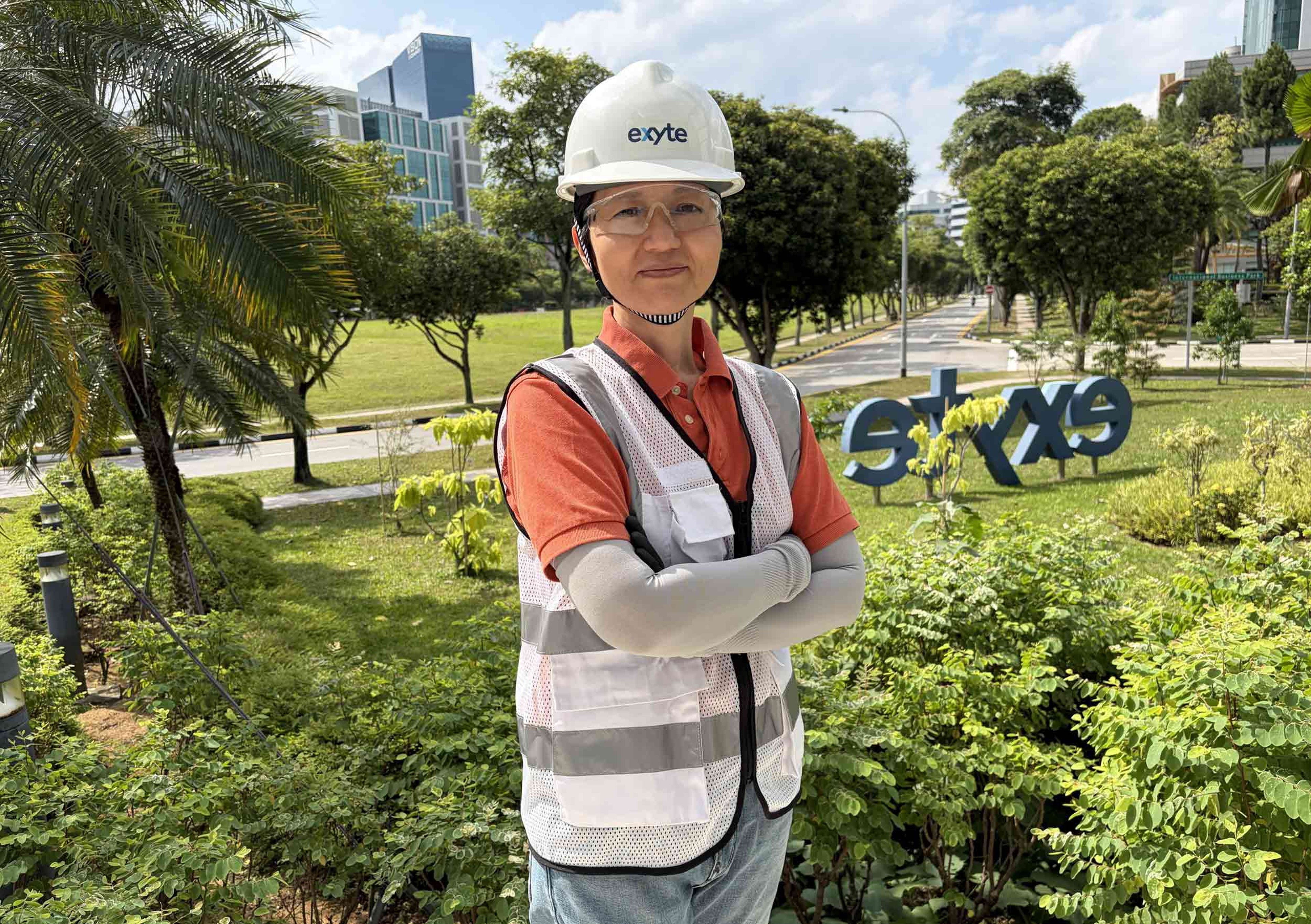
Inside every semiconductor fab, precision defines success. Machines weighing several tonnes must be positioned with millimetre accuracy. Cleanrooms must remain contamination-free. Hundreds of systems must align before the first wafer ever enters production. For Lee Le Lian, Senior Project Manager, Exyte, this is where the semiconductor supply chain becomes real.
Her role sits at the intersection of engineering, logistics and global coordination, ensuring the highly specialised tools that power semiconductor manufacturing arrive, integrate and operate as planned.
“I actually entered the semiconductor industry by chance,” she says with a laugh. What started as an unanticipated beginning soon led Le Lian to a vast and dynamic field that became her long-term career.
More than 30 years later, she has built deep expertise managing one of the most complex phases of semiconductor manufacturing projects.
Where the supply chain meets the fab
Le Lian’s work focuses on a stage that few outside the industry ever see: tool installation. Before a semiconductor fab can produce chips, hundreds of specialised machines must be moved into cleanrooms and connected to facility infrastructure, utilities and production systems.
During a typical ramp phase, project teams may coordinate the installation of around 200 tools within three months, coordinating with suppliers around the world. “Moving a tool into the cleanroom and connecting the utilities may take two or three days per tool,” she explains. “But the preparation behind it can take months.”
Each machine must be positioned precisely and aligned with the fab’s manufacturing flow. Once installed, wafers move between tools through Automated Material Handling Systems (AMHS), robotic transport systems and conveyor networks that carry wafers safely across the cleanroom floor. “The positioning has to be exact,” Le Lian says. “Even small deviations can affect the whole system, especially when automated material handling relies on millimetre‑level positioning to function reliably.”
Behind what appears to be a seamless manufacturing operation lies a complex ecosystem involving equipment suppliers, engineering teams, subcontractors and semiconductor manufacturers.
Managing complexity at scale
Semiconductor projects operate on a scale that often surprises people outside the industry. Le Lian leads a core team of about 15 engineers, but project teams can expand to 20 to 50 specialists drawn from different departments. Depending on project scale, peak construction phases can involve more than a thousand workers on site, including subcontractors.
With so many moving parts, timelines can become intense, especially as projects approach completion. “As projects enter the final stretch, teams often shift into a high‑coordination mode, balancing speed and cost while working toward a fixed production deadline,” she says.
The role requires balancing technical coordination with people management. Engineers, equipment vendors, subcontractors and client teams must all align so that installations happen safely and efficiently.
Shaping supply chain resilience in practice
Over the past few years, the semiconductor industry has been forced to rethink how supply chains are structured. For Le Lian, the biggest shift can be summed up in one word: diversification.
“With global uncertainties—from geopolitical tensions to energy costs—companies are no longer relying on a single source for critical equipment or materials. They are qualifying multiple suppliers in parallel to avoid over reliance on any one supplier,” she explains. “Diversification creates options, and options create resilience.”
But diversification alone is not enough. From her experience managing large installation projects, Le Lian believes supply chain resilience depends on three key capabilities.
First, proximity to demand.
Many semiconductor equipment and material suppliers that were historically concentrated in Europe or the United States are expanding their presence in Asia. Being closer to customers shortens delivery timelines and allows suppliers to respond more quickly when project requirements shift.
Second, deeper supplier partnerships.
Highly specialised systems must integrate with extreme precision, making suppliers long-term partners who understand the complex technical requirements of fabs.
Her team frequently collaborates with vendors from early design stages to align on technical details upfront, minimize rework, and keep installation schedules on track, to ensure timely and quality deliverables.
“Technical capability is critical,” Le Lian says. “But equally important is having suppliers who understand how their systems fit into the larger manufacturing environment.”
Third, better anticipation and sensemaking of future needs.
Traditionally reactive, supply chains are now shifting toward anticipating future client needs. With the growing use of data analytics and digital modelling, engineering teams can analyse patterns across projects, from equipment trends to infrastructure needs, to guide facility planning and cost estimation earlier in the process.
“We’re moving towards being more predictive with engineers and planners considering supplier constraints and lead‑time risks much earlier in the project lifecycle.”
Building the next generation
For Le Lian, people matter most, a lesson shaped by a mentor who guided her early career in tool installation and built her technical foundation. Today, she pays it forward by mentoring younger engineers, including encouraging a colleague to take on her first overseas assignment by sharing her own U.S. experience.
“That experience helped her build confidence and take on larger responsibilities,” she says. When timelines allow, she gives team members space to try first. “If something goes wrong, we fix it together.”
The infrastructure behind every chip
Every semiconductor operation relies on teams keeping manufacturing systems running with precision. What Le Lian finds most rewarding is seeing that system come together.
“When you walk into a fab and see the tools running,” she reflects, “you know the work your team did helped make that possible.”
Supply chain resilience may be invisible, but engineers like Le Lian ensure everything is in place long before the first wafer enters production.
This article was first published in Voice Magazine by the Singapore Semiconductor Industry Association (SSIA).